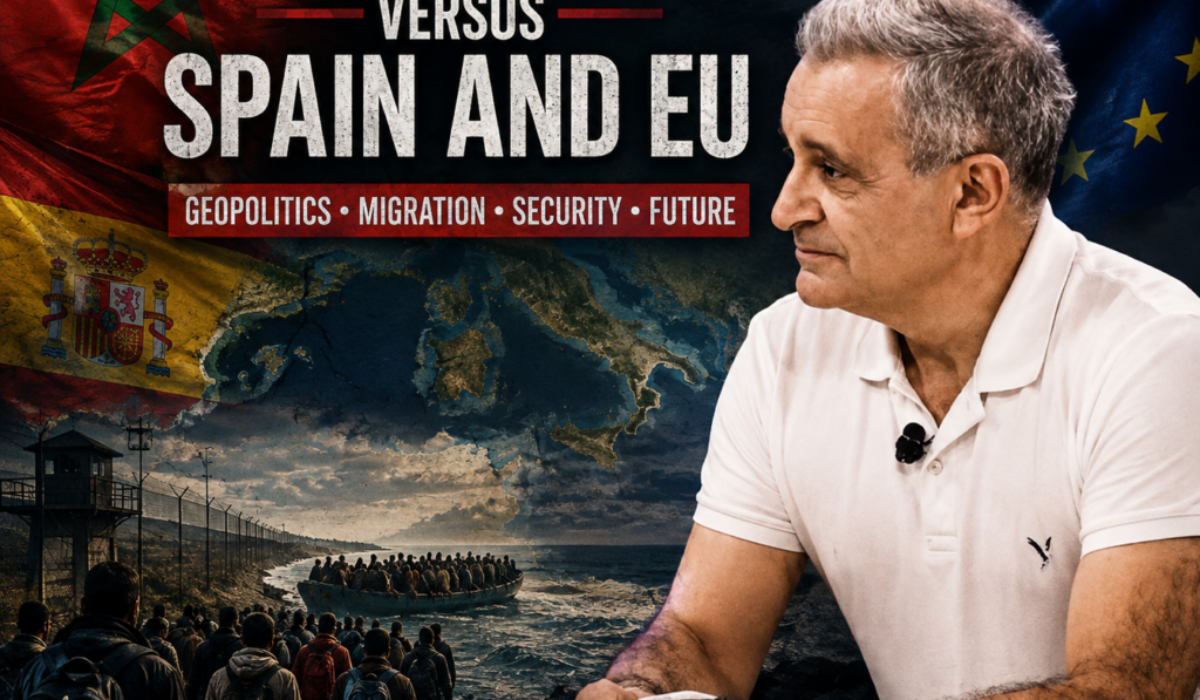
- August 4, Bratislava – Juan A. Aguilar, Director of the Spanish Institute of Geopolitics, physicist, systems engineer, and international analyst, spoke exclusively to TVV about the broader geopolitical context of the migration crisis affecting Spain.
- Do you expect Spanish legislation to change following the recent migrant surge in Ceuta?
- How do you expect Spain to respond to the call by 22 countries requesting the temporary suspension of Spain's participation in the Schengen Area?
- Was the migrant wave organized?
- In your analysis, you identify several factors that have enabled Morocco to significantly expand its influence over Spain. Which do you consider the most important?
- You argue that these events should be understood within a broader geopolitical timeline.
4. augusta, Bratislava – Riaditeľ Španielskeho inštitútu geopolitiky, fyzik, systémový inžinier a medzinárodný analytik Juan A. Aguilar exkluzívne pre TVV o súvislostiach migračnej krízy.
Bude sa podľa Vás meniť španielska legislatíva po návale migrantov na Ceute?
To, čo dnes máme, je rozhodnutie Najvyššieho súdu, ktoré vytvára právny precedens. V zásade však môžu v budúcnosti prísť ďalšie rozhodnutia, ktoré budú zákon vykladať odlišne. O súčasnom rozsudku možno prinajmenšom povedať, že prišiel vo veľmi nevhodnom čase, najmä vzhľadom na okolnosti, za akých bol vydaný.
Nemyslím si, že je v krátkodobom ani strednodobom horizonte reálna legislatívna zmena. Vláda by na to potrebovala hlasy poslancov zo strán naľavo od nej, ktorí by jej ich neposkytli. Práve títo poslanci však zároveň zabezpečujú vláde parlamentnú väčšinu potrebnú na vládnutie. V Španielsku dnes všetko visí na vlásku.
Aka bude reakcia Španielska na výzvu 22 krajín, ktoré žiadajú dočasné pozastavenie účasti Španielska v schengenskom priestore ?
Reakcia sa pravdepodobne obmedzí na vyhlásenia a politické stanoviská kritizujúce nedostatok európskej solidarity (podľa autora oprávnene, s výnimkou niektorých konkrétnych prípadov, ako je Slovensko a jeho premiér Robert Fico).
Vláda Pedra Sáncheza si uvedomuje, že je pod silným tlakom anglo-sionistických mocností, a akýkoľvek razantnejší krok by sa mohol ešte zvýšiť. Preto chýba odvaha reagovať na Európsku úniu spôsobom, aký by si podľa neho zaslúžila.
Bola migračná vlna organizovaná?
Operácia, ktorej sme boli svedkami, nie je dôsledkom rozhodnutia súdu, ktoré by následne využili prevádzačské mafie. Takéto vysvetlenie označuje za absurdné. Ako dôkaz uvádza zábery desaťtisícov mladých ľudí, ktorí boli podľa neho privezení z rôznych častí Maroka nákladnými vozidlami. Nešlo o migrantov, ale o osoby, z ktorých sa približne polovica dobrovoľne vrátila späť už v priebehu niekoľkých hodín. Marocká žandarméria týmto ľuďom pomáhala a otvorila im hraničné priechody práve počas osláv Dňa trónu, keď si Maroko pripomínalo výročie nástupu svojho panovníka na trón.
Vo svojej analýze uvádzate viacero faktorov, ktoré podľa vás umožnili Maroku výrazne posilniť svoj vplyv voči Španielsku. Ktoré považujete za najdôležitejšie?
Juan Antonio Aguilar:
Podľa môjho názoru nejde o jediný faktor, ale o kombináciu viacerých procesov, ktoré sa navzájom posilňovali.
Prvým je strategické spojenectvo medzi Spojenými štátmi, Izraelom a Marokom. Domnievam sa, že práve toto partnerstvo poskytlo Rabatu silnú diplomatickú ochranu, podporilo modernizáciu jeho ozbrojených síl a zároveň posilnilo jeho postavenie pri presadzovaní územných nárokov, najmä v otázke Západnej Sahary.
Druhým faktorom je dlhodobý vplyv marockej lobby v Španielskej socialistickej robotníckej strane (PSOE). Podľa môjho názoru sa počas viac ako dvoch desaťročí vytvorila generácia politikov, ktorí systematicky presadzovali postoje priaznivé pre Maroko. To napokon pripravilo pôdu pre zásadnú zmenu politiky vlády Pedra Sáncheza voči Západnej Sahare.
Veľmi vážnou témou je aj kauza Pegasus. Som presvedčený, že rozsiahla špionáž namierená proti predstaviteľom španielskej vlády, ktorú pripisujem Maroku, mohla mať významný vplyv na rozhodovanie v kľúčových politických momentoch.
Zároveň považujem za problém aj postoj opozície. Namiesto širšej analýzy geopolitických súvislostí sústreďuje svoju kritiku takmer výlučne na vládu Pedra Sáncheza. Podľa môjho názoru sa pritom dostatočne nevenuje úlohe Spojených štátov a Izraela, ktoré vnímam ako mocnosti presadzujúce vlastné záujmy aj na úkor španielskej suverenity.
Napokon nemožno obísť ani vnútorné oslabenie samotného Španielska. Hovorím o postupnom oslabovaní národnej identity a úpadku politických elít. Práve tieto faktory podľa mňa znižujú spoločenskú súdržnosť krajiny a jej schopnosť odolávať tlaku, ktorý dnes prebieha súčasne vo vojenskej, demografickej, politickej, mediálnej aj kultúrnej rovine.
Tieto udalosti je potrebné analyzovať v širšom časovom kontexte:
- Marec 2026: Michael Rubin (USA) označuje Španielsko za koloniálnu mocnosť a odporúča uskutočniť „Zelený pochod“ na Ceutu a Melillu.
- Apríl 2026: Mario Díaz-Balart (USA) spochybňuje španielsku suverenitu nad Ceutou a Melillou v Snemovni reprezentantov USA.
- Máj 2026: Výbor Snemovne reprezentantov USA pre rozpočtové prostriedky prijíma formulácie podporujúce marocký postoj a uvádza, že Ceuta a Melilla nie sú španielskym územím.
- Apríl 2026: I24 News podľa autora zverejňuje stratégiu Izraela využívať spojenectvo s Marokom proti Španielsku.
- Júl 2026: Izraelský veľvyslanec pri OSN obviňuje Španielsko z udržiavania koloniálnych enkláv.
- 20. júl 2026: Návšteva Pedra Sáncheza v Alžíri.
- Súbežne: Washington podľa autora vojensky kryje Maroko a dochádza k udalostiam v Ceute.
- Napokon: Celé načasovanie je podľa autora využité na spustenie operácie.
Ďakujem za rozhovor
redaktorka Michała Gánovská
English version:
August 4, Bratislava – Juan A. Aguilar, Director of the Spanish Institute of Geopolitics, physicist, systems engineer, and international analyst, spoke exclusively to TVV about the broader geopolitical context of the migration crisis affecting Spain.
Do you expect Spanish legislation to change following the recent migrant surge in Ceuta?
Juan Antonio Aguilar:
What we currently have is a ruling by the Supreme Court that establishes a legal precedent. In principle, however, future rulings could interpret the law differently. At the very least, it can be said that the current judgment was delivered at a particularly unfortunate moment, especially considering the circumstances under which it was issued.
I do not believe that legislative change is realistic in the short or medium term. The government would need the support of parties to its left, but those parties are unlikely to provide the necessary votes. At the same time, those same parties are essential for maintaining the parliamentary majority that keeps the government in power. In Spain today, everything hangs by a thread.
How do you expect Spain to respond to the call by 22 countries requesting the temporary suspension of Spain’s participation in the Schengen Area?
Juan Antonio Aguilar:
The response will most likely be limited to political statements criticizing what the government sees as a lack of European solidarity—justifiably so, in my opinion, with the exception of certain countries such as Slovakia and its Prime Minister, Robert Fico.
Pedro Sánchez’s government is aware that it is under considerable pressure from what I describe as Anglo-Zionist powers, and any more decisive response could further intensify that pressure. Consequently, the government lacks the political will to respond to the European Union in the manner that, in my view, the situation would warrant.
Was the migrant wave organized?
Juan Antonio Aguilar:
The operation we witnessed was not a consequence of the Supreme Court’s ruling that was subsequently exploited by human trafficking networks. I consider that explanation absurd.
As evidence, I point to footage showing tens of thousands of young people who, according to my analysis, were transported from different parts of Morocco in trucks. These were not migrants in the traditional sense but individuals, roughly half of whom voluntarily returned within just a few hours.
The Moroccan Gendarmerie facilitated their movement and opened the border crossings during the celebrations of Throne Day, when Morocco commemorated the anniversary of the King’s accession to the throne.
In your analysis, you identify several factors that have enabled Morocco to significantly expand its influence over Spain. Which do you consider the most important?
Juan Antonio Aguilar:
In my view, there is no single decisive factor. Rather, it is the combination of several interconnected processes that have reinforced one another over time.
The first is the strategic alliance between the United States, Israel, and Morocco. I believe this partnership has provided Rabat with strong diplomatic backing, facilitated the modernization of its armed forces, and strengthened its position in advancing its territorial claims, particularly regarding Western Sahara.
The second factor is the long-term influence of the Moroccan lobby within the Spanish Socialist Workers‘ Party (PSOE). In my opinion, more than two decades of political influence created a generation of politicians who consistently promoted policies favorable to Morocco, ultimately paving the way for Pedro Sánchez’s government’s shift in its position on Western Sahara.
Another highly significant issue is the Pegasus spyware affair. I believe that the extensive surveillance targeting members of the Spanish government, which I attribute to Morocco, may have influenced decision-making during key political moments.
I also see the opposition’s approach as problematic. Rather than examining the broader geopolitical context, it has focused almost exclusively on criticizing Pedro Sánchez’s government. In my opinion, it has largely avoided addressing the role of the United States and Israel, which I view as powers pursuing their own strategic interests, even when those interests conflict with Spanish sovereignty.
Finally, one cannot ignore Spain’s internal weakening. I am referring to the gradual erosion of national identity and the decline of the country’s political elites. In my view, these developments have reduced Spain’s social cohesion and its ability to withstand pressure being exerted simultaneously on military, demographic, political, media, and cultural fronts.
You argue that these events should be understood within a broader geopolitical timeline.
Juan Antonio Aguilar:
These developments should not be viewed in isolation but rather as part of a broader sequence of events.
- March 2026: Michael Rubin (United States) described Spain as a colonial power and suggested organizing a „Green March“ toward Ceuta and Melilla.
- April 2026: Congressman Mario Díaz-Balart questioned Spanish sovereignty over Ceuta and Melilla in the U.S. House of Representatives.
- May 2026: The U.S. House Appropriations Committee adopted language supporting Morocco’s position, stating that Ceuta and Melilla are not Spanish territory.
- April 2026: According to my analysis, i24NEWS published a strategy describing Israel’s intention to use its alliance with Morocco against Spain.
- July 2026: Israel’s Ambassador to the United Nations accused Spain of maintaining colonial enclaves.
- July 20, 2026: Spanish Prime Minister Pedro Sánchez visited Algeria.
- At the same time: According to my analysis, Washington continued providing military backing to Morocco while the events in Ceuta unfolded.
- Ultimately: In my opinion, the timing of all these developments was used to facilitate the launch of the operation we have witnessed.
Thank you for the interview.
Interviewer: Michala Gánovská
Editorial note: The answers above reflect the opinions and analysis of Juan Antonio Aguilar expressed during the interview. They do not necessarily represent the views of TVV.

Michala Ganovská LL.M je slovenská novinárka, ktorá sa venovala zahraničnej politike a domácemu spravodajstvu. Pred rokom založila spravodajské portály www.tvv.sk a www.veci-verejne.sk a tiež Youtubový kanál Televízia Veci verejné. Venuje sa komentovaniu spoločenského diania a politiky a tiež prináša správy…